
The National Iron & Steel Heritage Museum in Coatesville, PA, is a fascinating site to learn about the history of iron and steel, as well as its use in the construction of items from sports stadiums to fire engines. When I visited this past summer, I was fascinated to see the use Lukens steel in the construction of some amazing pieces from maritime history and the present. I’ve mentioned in prior blog posts the connection between Lukens steel and the construction of the hull of JOIDES Resolution, Glomar Explorer, and GUPPY. This blog post will highlight a large object viewable outdoors in the parking lot of the museum – one of the sonarspheres manufactured on site.
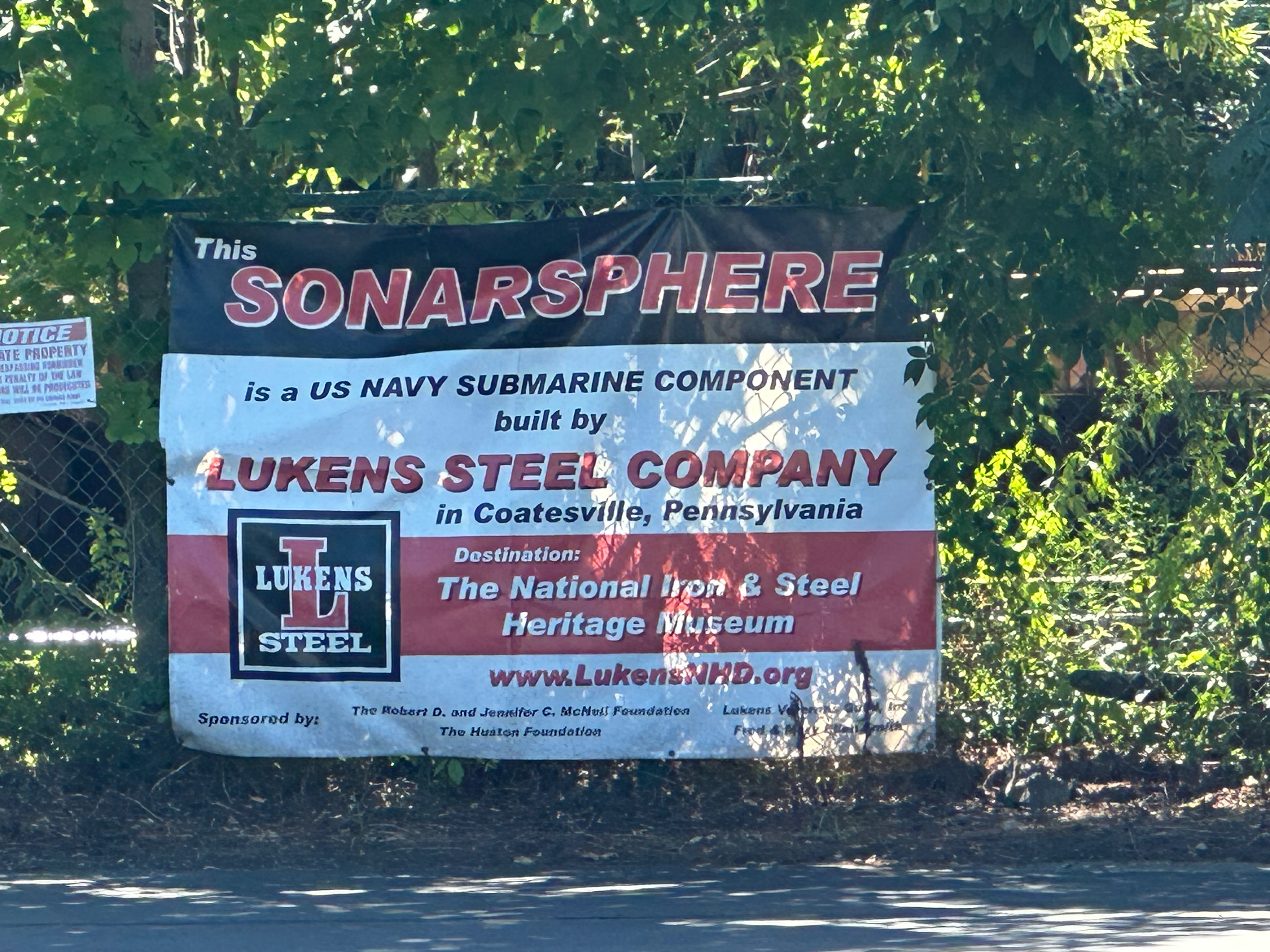

A sonarsphere is a steel ball placed in the bow of a submarine. Measuring 15 feet by 15 feet by 21 feet in diameter and weighing 27 tons, this sphere would hold 1,245 hydrophones to help submarines detect underwater noises through sonar.
From The National Iron & Steel Heritage Museum web page on the Sonarsphere (which also has additional images you can scroll through of the sonarsphere arriving at the museum):
In the 1970s and 1980s Lukens and Canadian Lukens produced over 80 sonarspheres for submarines in the United States Navy. [This object on display] was originally manufactured at Lukens Steel in 1984 and designed for use on nuclear submarines. Our sonarsphere was donated to us by Government Liquidation of Scottsdale, Arizona.
Lukens Steel delivered sonarspheres to the U.S. Navy on a special trailer called a Low-Boy. A similar Low-Boy brought this sphere from the Portsmouth Naval Shipyard in Kittery, Maine to Coatesville. After a winding journey (to avoid certain bridges, tunnels and overpasses) through seven states it arrived on November 1, 2007. Wm. F. Gaebel Trucking Company handled the transport.
Below are some of the images I took inside of the museum describing the sonarsphere.
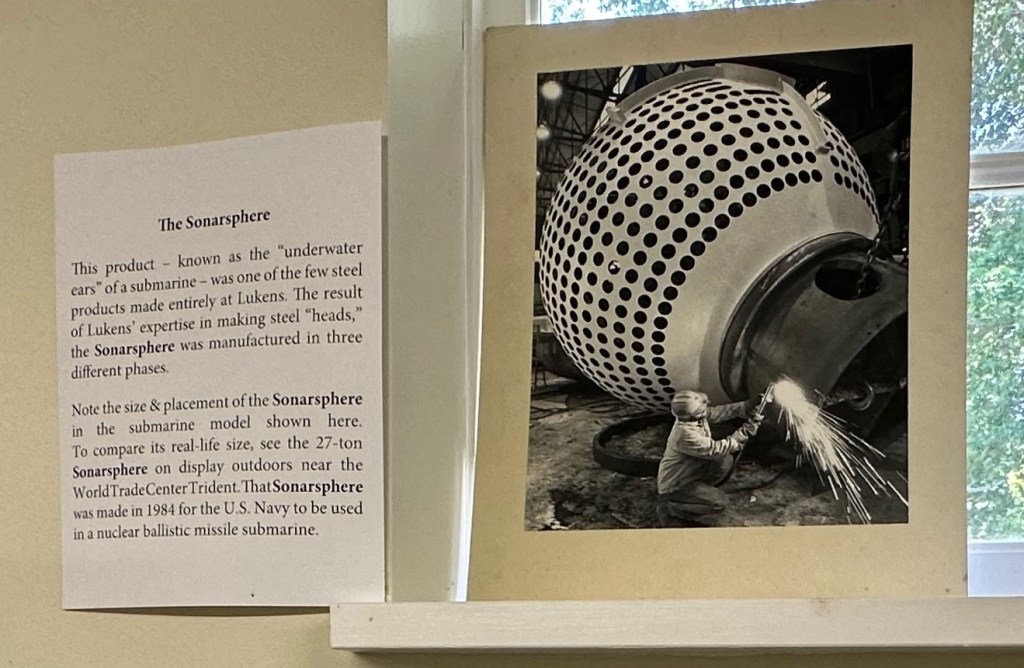
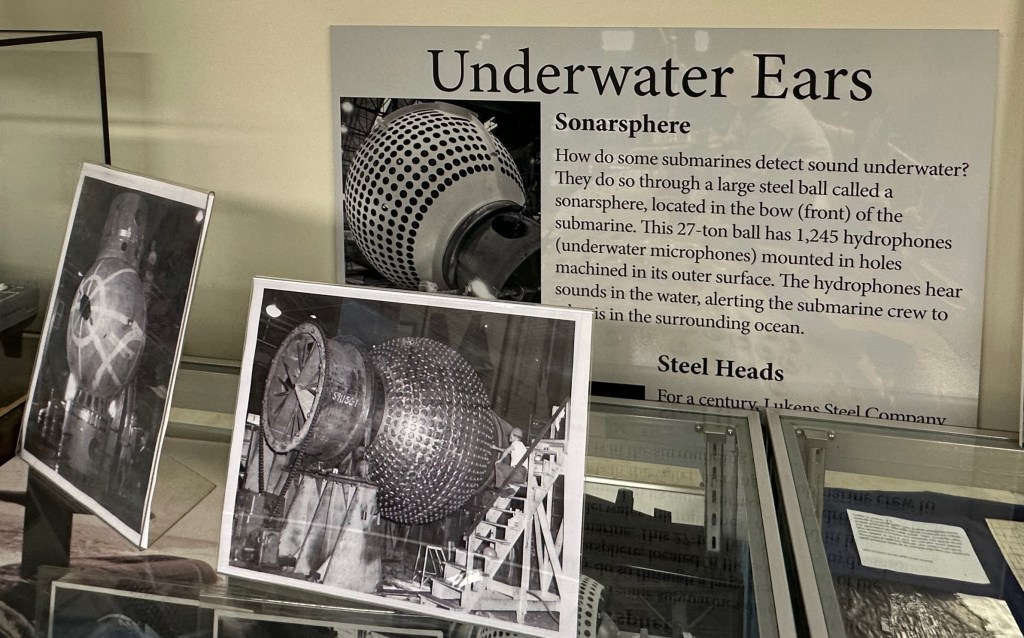
The sonarsphere played an important role in detecting and classifying underwater noises, whether natural or from manmade objects. And importantly to The National Iron & Steel Heritage Museum, this sonarsphere is the first Lukens Steel product manufactured in Coatesville and returned home to the museum, which happened in 2007. During my tour of the museum, our tour guide said that the museum was hoping to get the submersible Alvin as part of the museum’s displays, once the Alvin concludes its service to scientists exploring the deep sea (Alvin’s hull was also manufactured by Lukens Steel). Stay tuned, as I am sure there will be more maritime contributions I’ll be posting, thanks to the products produced at Lukens!
 Journeys of Dr. G