
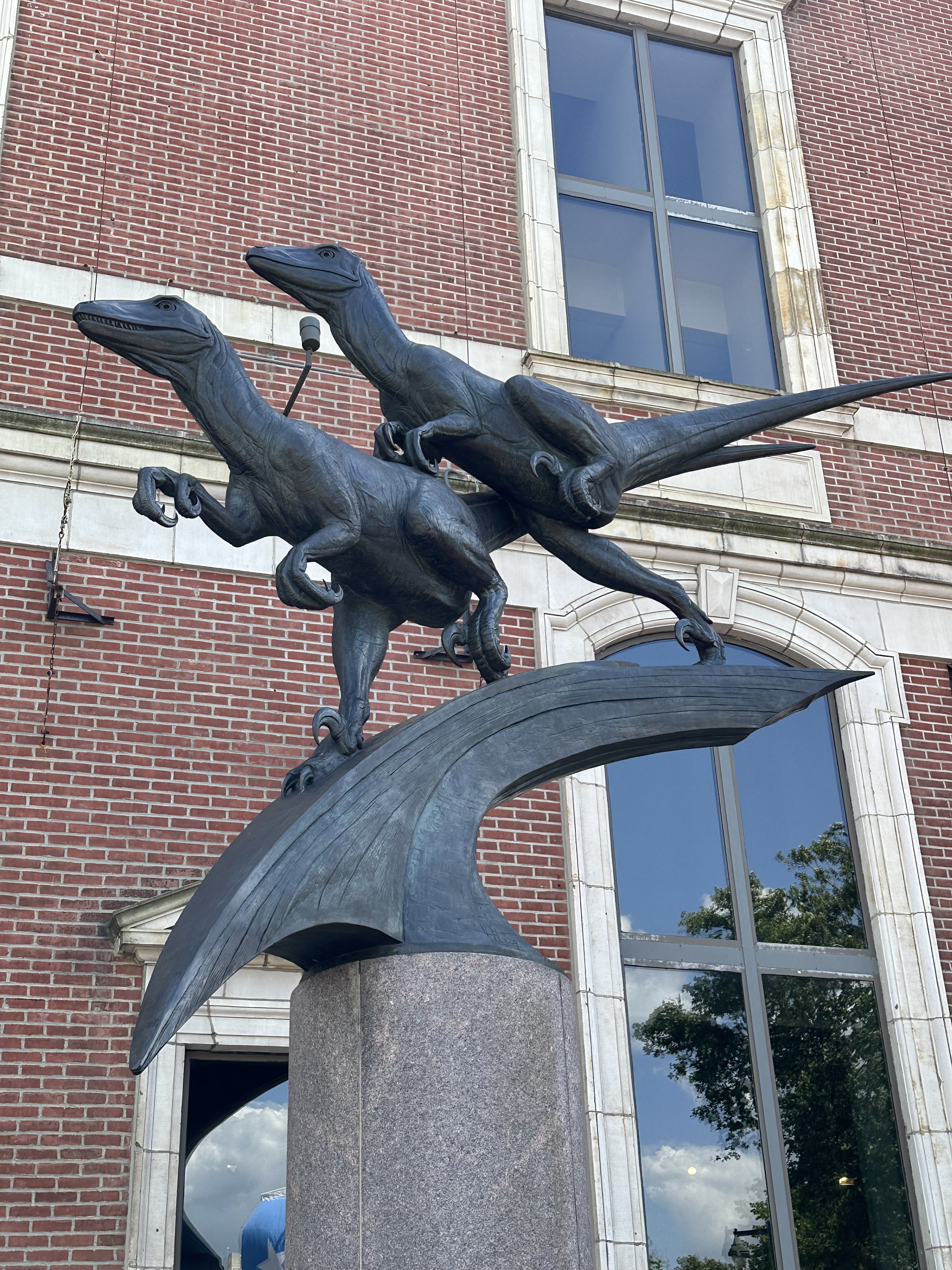
It’s been a secret wish of mine to be a speaker at The Academy of Natural Sciences of Drexel University (ANSP) in Philadelphia, PA. This museum has such history and has been the center of significant contributions to science, such as the start of the Great Bone Wars/Dinosaur Rush, and the construction of the first dinosaur mount in any museum (thanks to the Hadrosaurus foulkii – yes, I’ve always been a dinosaur fan!). To be able to speak on the stage to an audience in the same location as incredible scientists through time have done… well, it’s been a dream… that became a reality!
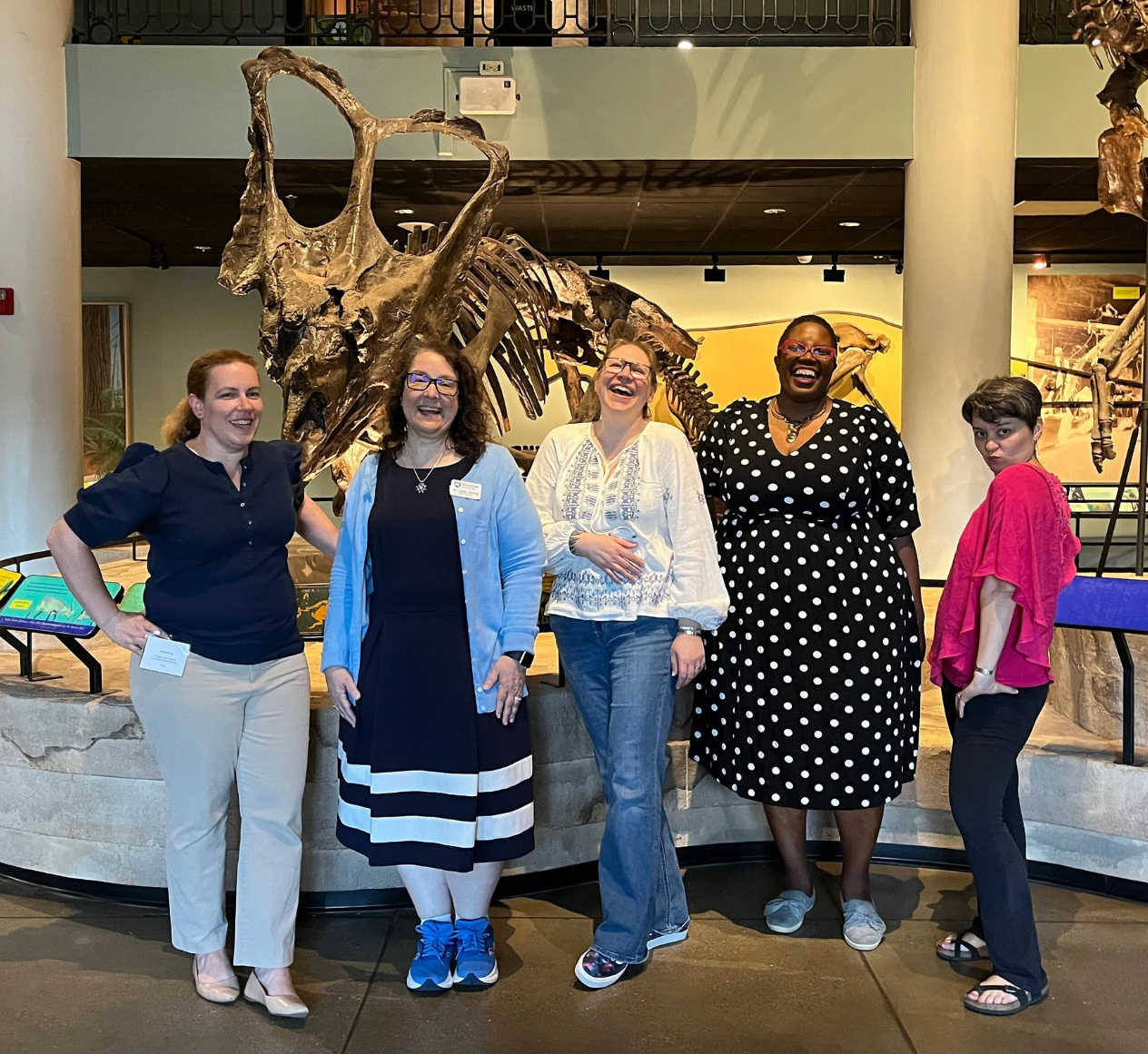
In June 2024, I was invited to be a part of a panel at ANSP called Telling Our Stories: Gender Minorities in the Sciences at the Academy (this link will take you to a summary blog post of the event). I joined amazing women from the region to share our experiences growing up and entering our STEM fields. Each of us were from different STEM disciplines and career fields. We were asked to prepare responses to the following questions:
- What inspired you to become a scientist?
- Do you experience imposter syndrome, and if so, how do you manage/handle it?
- Give us an example of where/when you felt appreciated.
- Discuss your biggest challenges in your current career – do you feel that your gender was an aspect of the challenge?
- How can we promote a better work environment for gender minorities in our institutions?
I was proud to be a part of this panel that all demonstrated strength, courage, perseverance, in addition to sharing the times of frustration, exhaustion, and discouragement. Yes, there were tears. Yes, there was disappointment to see so few men in the audience (if I remember correctly – only one?). I was able to share some great quotes from two articles I read on the SEPTA Regional Rail coming in to the city:
The onus of fostering such an environment should not be on the individuals who have been systemically targeted and excluded but, rather, on those who can listen to the needs of their marginalized colleagues and leverage their privilege to create lasting change. — Huang et al. (2024), Empowering Genderqueer Geoscientists: Being and Building the Change
The present study investigated the impact of messages highlighting the contributions of women researchers to two STEM fields (mathematics and biology) on the perception of those fields among high school students and comparing it to the impact of analogous messages concerning three non-STEM fields… both women and men saw that [STEM] academic field as less interesting and worthy of study… people think that if women excel in certain fields, then those fields must be less valuable than others. — Malecki et al. (2024), The reverse Matilda effect: Gender bias and the impact of highlighting the contributions of women to a STEM field on its perceived attractiveness
I think we all had a “yikes!” reaction to the second article. But in the end, the takeaway for me is the first sentence in the ANSP blog post: “An overarching theme arose at the Academy’s inaugural Gender Minorities in the Sciences panel: the importance of storytelling.”
In addition to always cherishing this incredible opportunity to share with these amazing individuals, I have to wonder about the history of support for gender minorities from the Academy of Natural Sciences. The sign on the Deinonychus statue out front (statue pictured at the top of this post) has me curious what other programs have been in place through the years at this institution. Who were these women? How did they facilitate the science and collections/displays in advancing our fields?
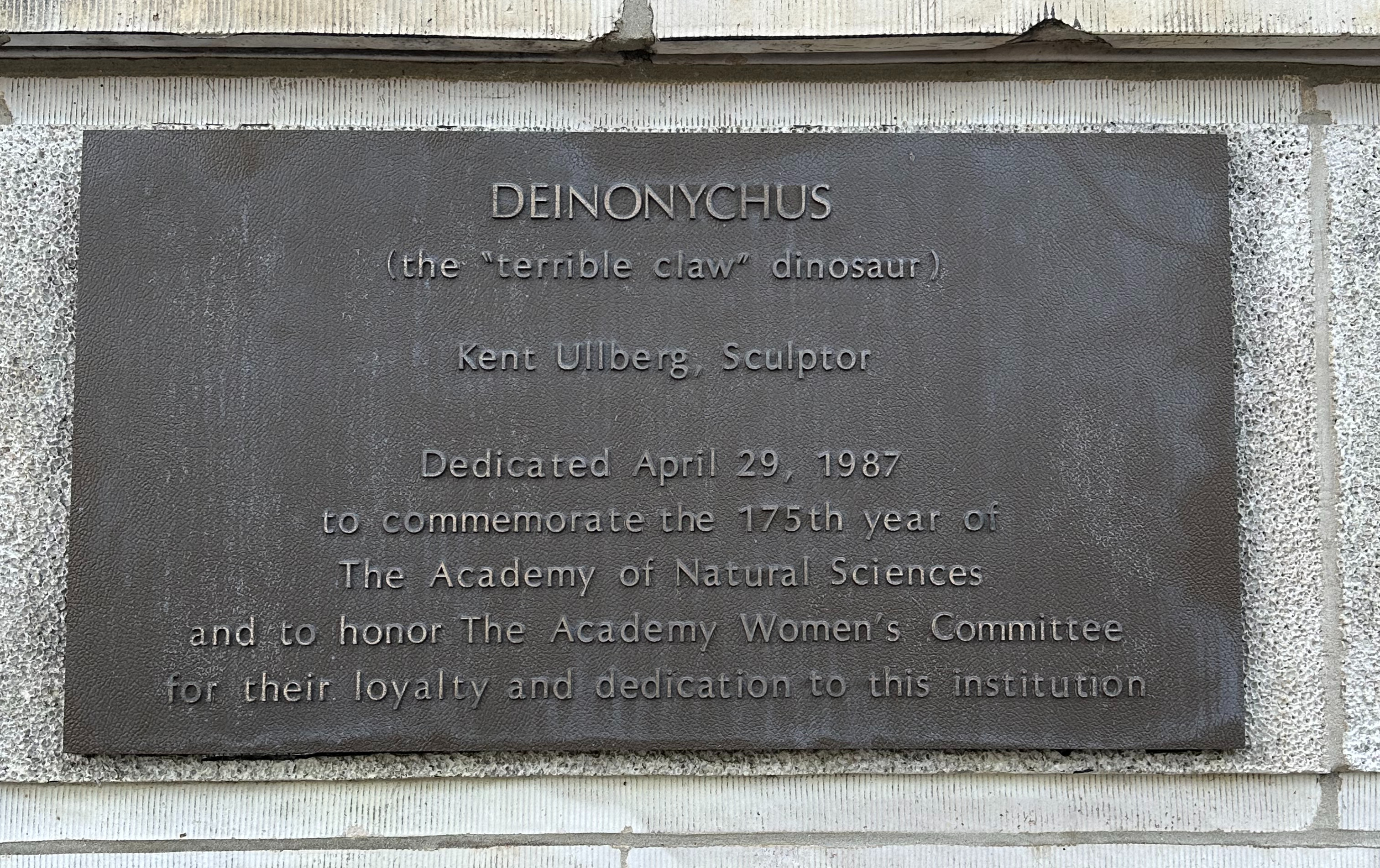
Until next time, ANSP! I look forward to seeing more exhibits, and I so appreciate this secret wish coming true!
 Journeys of Dr. G
A comment was just posted online relating to the second article: “Trotula” is not an example of the Matilda effect: On correcting scholarly myths and engaging with professional history: A response to Malecki et al. 2024 – https://onlinelibrary.wiley.com/doi/full/10.1002/sce.21897
LikeLike