
I’ve just returned from my second visit to the campus of the Scripps Institution of Oceanography in La Jolla, California, where I gathered with my colleagues that serve on the U.S. Advisory Committee (USAC) for the U.S. Science Support Program (USSSP) for scientific ocean drilling. We meet in person twice a year to discuss topics ranging across workshops, staffing expedition, nominations, science communication, and more. The work of our committee is important and I’m honored to be surrounded with such scientifically talented and passionate people. But this blog post won’t focus on them or the committee – it’s all about Scripps!

This is not my first visit to the Scripps Institution of Oceanography. The day before the start of the Ocean Sciences Meeting in 2020, there was a one-day field trip to the campus of Scripps and the Birch Aquarium, both part of UC San Diego. I blogged about the information I learned and posted photos from both sites, including the opportunity to visit the museum on the Scripps campus and a walk out on the Scripps pier [see prior post, CA – Ocean Sciences Meeting, fieldtrip].
I was excited to be on the Scripps campus again, as if you know oceanography, then you know how special this location is. The Scripps website has an excellent overview of its history, but I didn’t realize the full extent of how so much of oceanographic research began at this spot. If interested, I encourage you to review the Scripps Time Line published by The Oceanography Society (TOS), as well as the entire Special Issue: Celebrating 100 Years of Oceanography at Scripps Institution of Oceanography (2003).
For example, let’s start with the George H. Scripps Building. Also known as the Old Scripps Building and the George H. Scripps Memorial Marine Biological Laboratory, this building is recorded as the first permanent structure of any shoreside marine biological station in the western hemisphere! Constructed in 1909-1910, the website says that for a number of years, this building housed all of the institution, including a public aquarium, research laboratories, and offices, and served as the home for the institution’s founder and first director, William Emerson Ritter, and his wife, physician Mary Elizabeth Bennet Ritter. Today, the building houses the graduate department and development office.


You may noticed the historic markers on either side of the front door of the building. These note Old Scripps designated as San Diego Historic Site #119 in 1977, listed in the National Register of Historic Places on November 10, 1977, and became a National Landmark in 1982. And if you are really into the history of historic structures, the Scripps Library has a PDF available online that is a historic structure report from 1979 which has the full history of the site, construction details, and more.
Although I didn’t get to walk out on the Ellen Browning Scripps Memorial Pier as I did during my last visit, it was interesting to read about an experiment being carried out for the past year.
The pier was originally a wooden pier built in 1916. Replaced in 1988 and now known as the Ellen Browning Scripps Memorial Pier, it is the location of so much environmental monitoring and diving research at the Scripps campus. Check out the large white containers on the pier – these are for a year-long atmospheric science monitoring project, collecting data on particles in the air, precipitation, solar and thermal radiation, temperature, pressure, wind, and humidity. All of these data will assist scientists in their study of low marine clouds as part of the Eastern Pacific Cloud Aerosol Precipitation Experiment (EPCAPE).
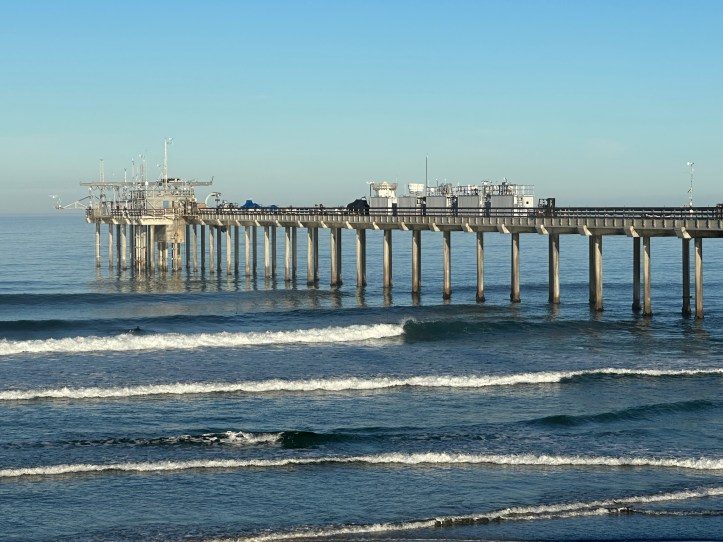
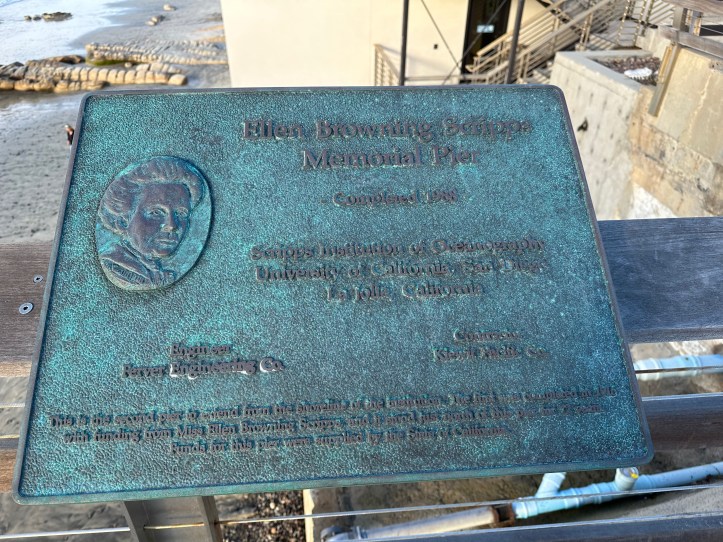


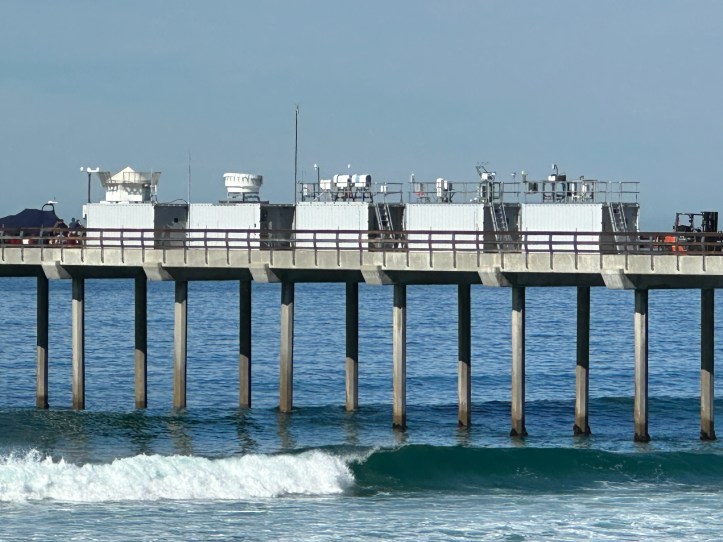

And at any time I want to see these views around the Scripps Pier again, I can always go online and check out the multiple Pier Cams, including an osprey cam!
Although I took the time to stop and appreciate this historic building during my last visit to Scripps, I couldn’t help but take pause again. The Keeling Curve is something I teach in all of my courses, and I had the amazing opportunity to visit and tour NOAA’s Mauna Loa Observatory, a National Historic Chemical Landmark. Charles David Keeling’s laboratory on the Scripps campus in Ritter Hall has not only been designated a National Historic Chemical Landmark along with the Mauna Loa Observatory, it is also named a Historic Physics Site by the American Physical Society. The building is named in honor of the first director of Scripps Institution of Oceanography, Dr. William E. Ritter.
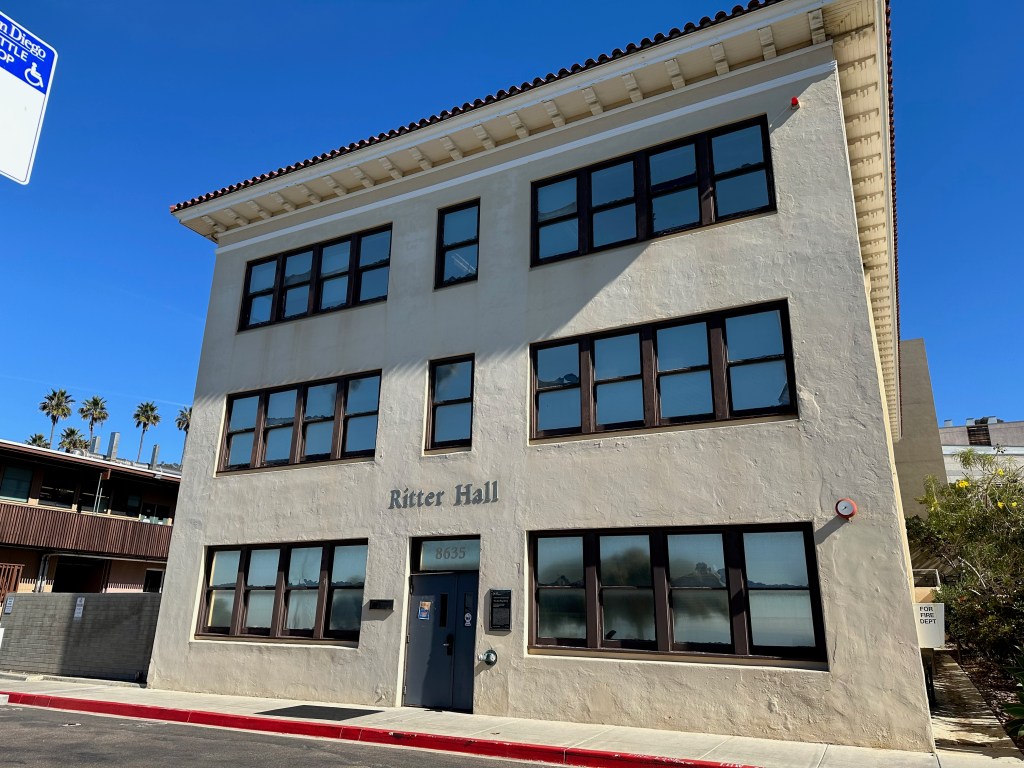
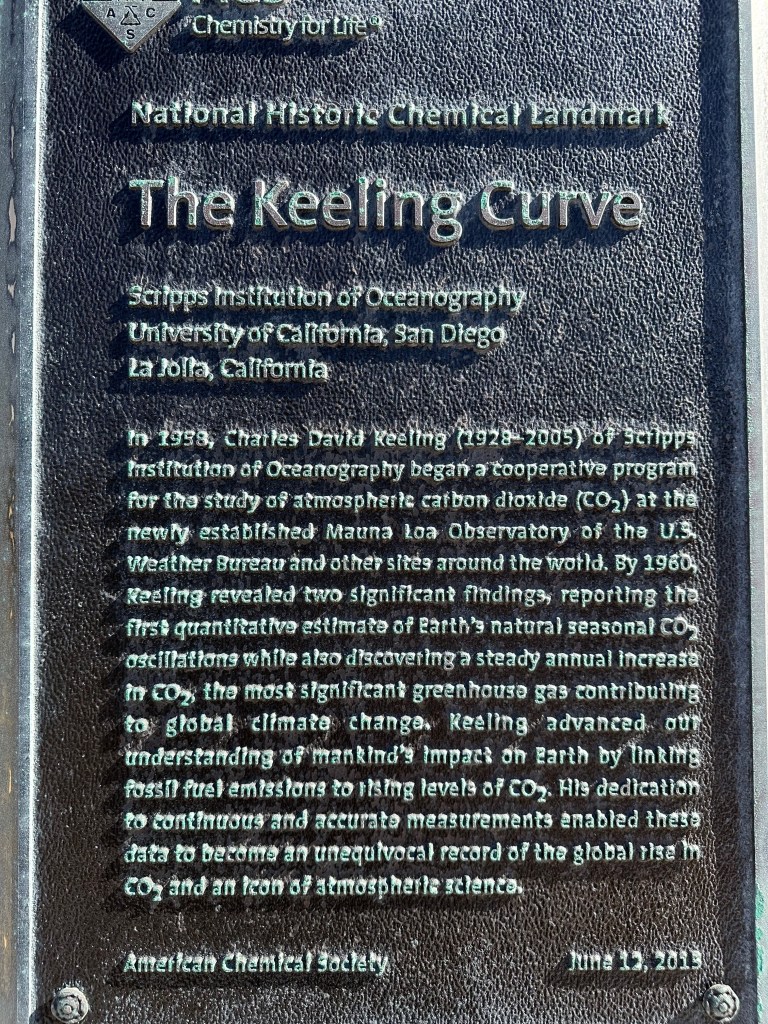

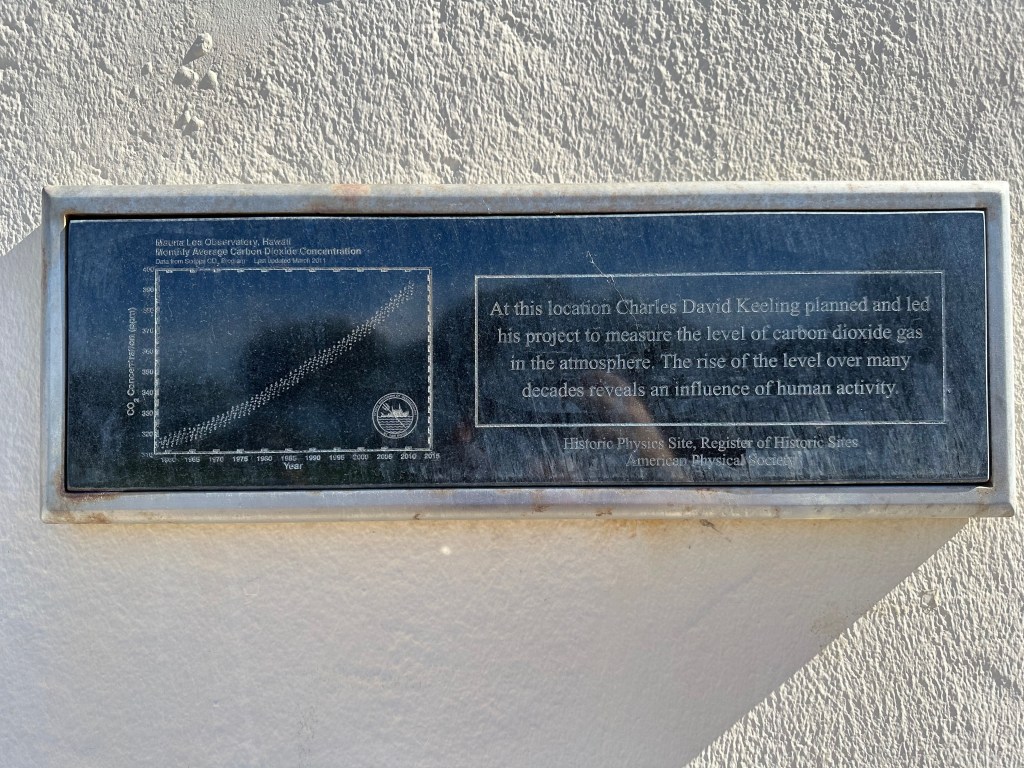
In addition to walking around campus during meeting breaks and seeing these historic sites on campus, I was able to attend a presentation by a Scripps researcher from his time as co-chief scientist a recent JOIDES Resolution expedition (IODP EXP 395 – Reykjanes Mantle Convection and Climate). It’s been some time since I attended a department seminar, and it was a nice addition to my exploration of the history of the campus – learning more about the history recorded in deep-sea material!
But the Sun set on my time in California after a week, and I returned to Pennsylvania to share my adventures with my students.
 Journeys of Dr. G